Why Changing the Locks May Not Be Enough After Leaving an Abusive Relationship
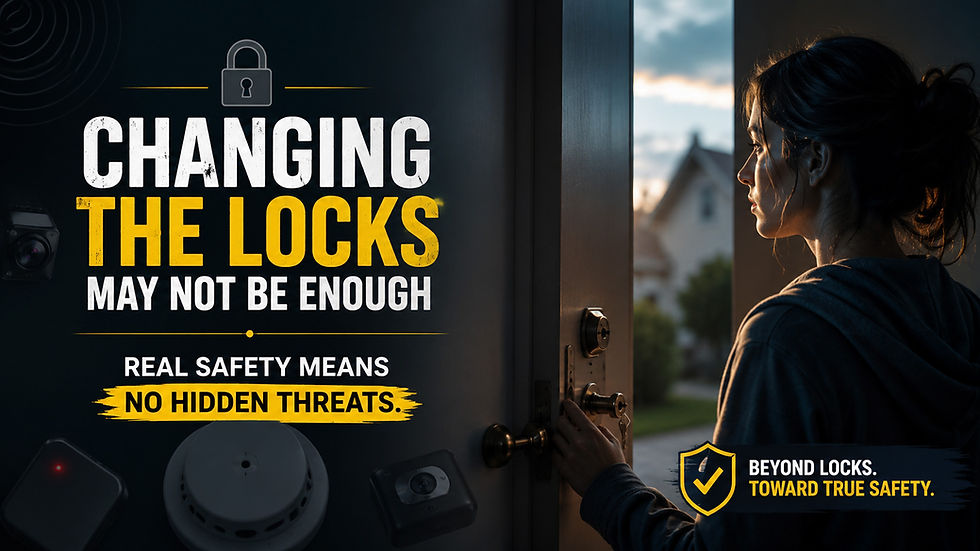
Getting away from a physically abusive partner requires the kind of guts most people never have the chance to display. When you are finally free, the first reaction that comes to you is to take control of the situation change the locks so you can feel safe, get your life back on track. Practically every person will do it straightaway because it makes sense and is just one thing that can get a person on the correct path.
But here's the uncomfortable truth: a new lock only stops someone from walking through your front door. It does nothing if they've already been inside.
If your ex-partner had access to your home, your car, your phone, or even your handbag at any point, changing the locks is treating one symptom of a much bigger problem. Controlling partners — especially the ones who monitored your movements, read your messages, or always seemed to "just know" where you were — don't always let go of that control the moment the relationship ends. Sometimes they've left something behind to make sure they don't have to.
The Locks Protect the Door. What About Everything Else?
Consider how much access your partner had various things during these times, be it keys, phone during shower, car while garaged, laptop while sleeping, gifts received, or toys owned by kids.
Hidden technology like listening devices, cameras and GPS trackers is cheap, compact, and is available for shopping online. One doesn’t need to be a tech expert to place doc in a strategic spot to watch, they only need five minutes and a motive. In many abusive relationships, control still evolves just becomes less formal; the abuser doesn’t stop controlling partners completely, but switches to a more subtle way of being; for example, he/she becomes aware of partners’ day-to-day life.
That’s where bug sweeping service becomes relevant. It’s not paranoia; it’s the necessity to lock all doors and not just the front door.
Common Places Devices Get Hidden
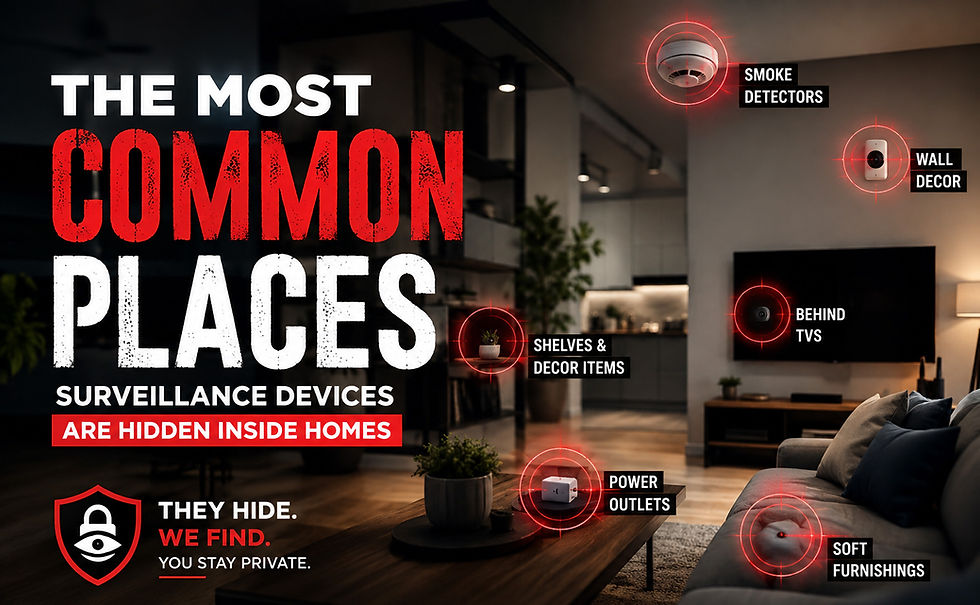
People are often shocked at how ordinary the hiding spots are. In our work doing residential sweeps for people leaving controlling or abusive situations, we regularly find devices in:
Power adapters, chargers, and power boards
Smoke detectors and light fittings
Soft toys, especially ones gifted "for the kids"
Vehicles — under seats, in the glovebox, wired into the electrics
USB drives or old phones left "by accident"
Router and modem equipment (for tracking online activity rather than audio)
None of these need physical access after the initial install. A tracker under your car only needs to be planted once. A hidden camera plugged into a power board can run for months without anyone noticing it's even there.
Why "I Would Have Noticed" Isn't Reliable
Individuals think they would be able to see something amiss. However, modern equipment for spying and eavesdropping is specifically made to go unnoticed. In some cases, these devices take a form of commonplace objects, while in others, they are so tiny that they can be put somewhere obscure, such as a vent or shelf. Therefore, without knowing exactly what to search for and how these devices are generally hidden, visually checking something will not lead to true safety, but to false security.
This is most definitely a red flag especially when the behavior includes anything that resembles a pattern of a person always checking up on you, like looking through your phone, checking your location "just to make sure that you were safe", turning up in a place that you didn't tell them you would be or getting a grip on details about your day that couldn't have been possible for them to find out in a normal way.
What a Proper Sweep Actually Involves
A professionally conducted counter-surveillance sweep or a TSCM (Technical Surveillance Counter-Measures) scan includes more than a physical inspection of an area and often involves:
RF (radio frequency) scanning to detect transmitting devices
Physical inspection of common hiding points in furniture, fittings, and electronics
Vehicle sweeps, including undercarriage and wiring checks
Network and Wi-Fi checks for unauthorised devices or monitoring software
Phone checks for stalkerware or spyware apps
The procedure of doing this means that it takes longer than other types of surveillance. The person conducting this has been properly trained to ensure that everything is checked. You can leave the premises knowing that it has actually been done.
It's About Peace of Mind, Not Overreacting
Some people hesitate to book a sweep because they worry it seems excessive. It isn't. If you've left a relationship where control, jealousy, or surveillance played a role, checking your home and car for hidden devices is simply due diligence — the same way you'd check the locks or update your passwords.
You deserve to feel safe in your own home without wondering if someone still has eyes or ears on you. A sweep gives you something a new lock alone can't: certainty.
Rebuilding Safety, Properly
The hardest aspect in the process is leaving. The part after that appears to be easier, although it works only if all angles are thought through. The door is protected by a lock while the password protects the accounts. Bug sweeping service protects everything else from things that don't announce themselves or stop watching after the ending of the relationship.
If something about your situation doesn't sit right — a strange battery drain on your phone, your ex knowing things they shouldn't, an odd device you can't explain — trust that instinct. It's usually worth checking.
Safety isn't just about letting someone in. It means that nothing has ever been left behind.


Comments